Mastering Prompt Engineering with the Pentagram Framework
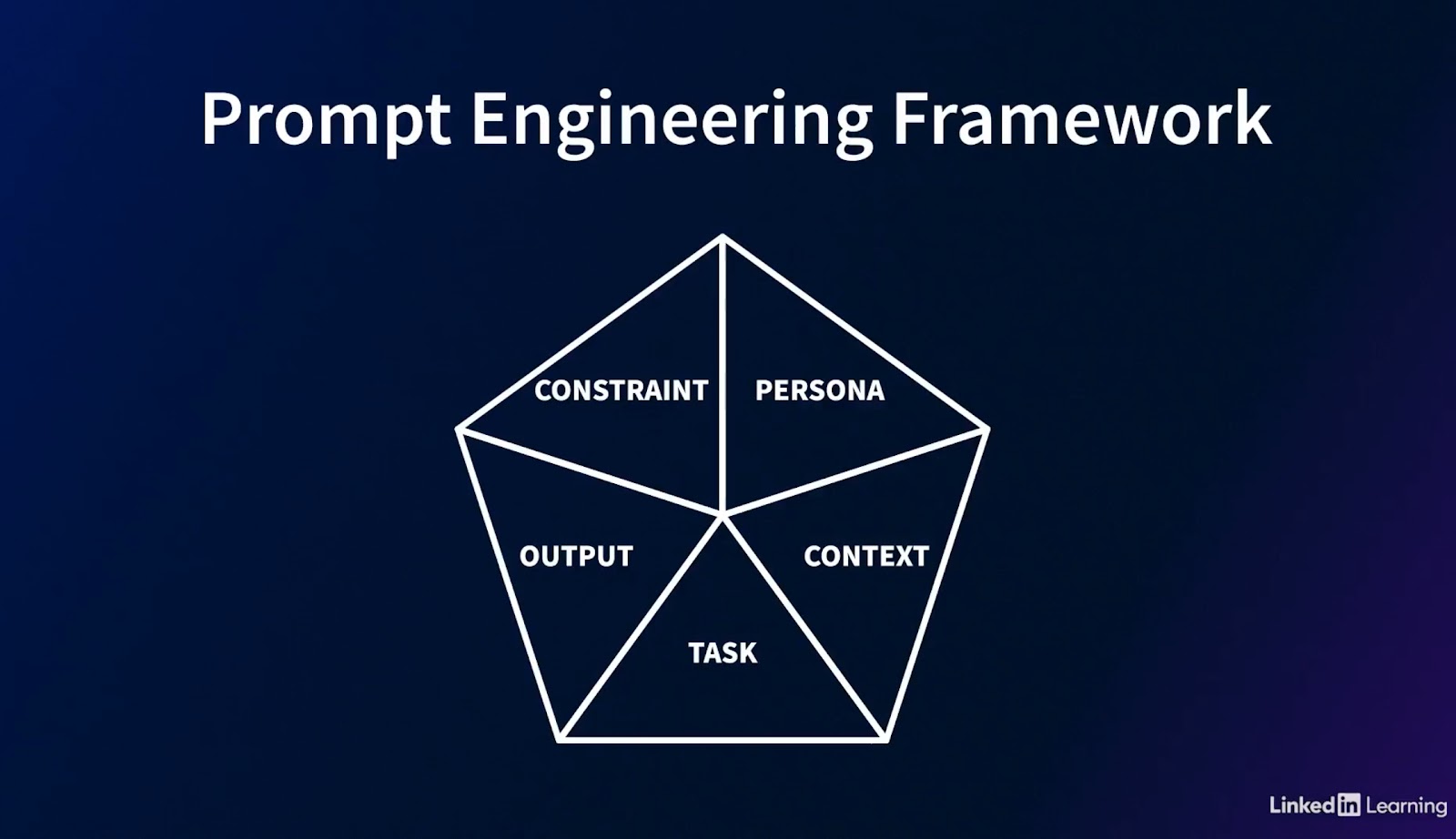
Mastering Prompt Engineering with the Pentagram Framework
Introduction
"My sword I leave to him who can wield it." – Charlie Munger
Large Language Models (LLMs) are the sharpest tools in the AI landscape today. But do you know how to wield them effectively? Do you understand how to craft prompts that maximize their capabilities?
A well-constructed prompt can significantly enhance an LLM’s performance. The Pentagram Framework for Prompt Engineering is designed to guide users in constructing powerful, relevant, and effective prompts. By following this structured approach, you can ensure that your interactions with AI models produce the best possible outcomes.
The Five Principles of the Pentagram Framework
1. Persona
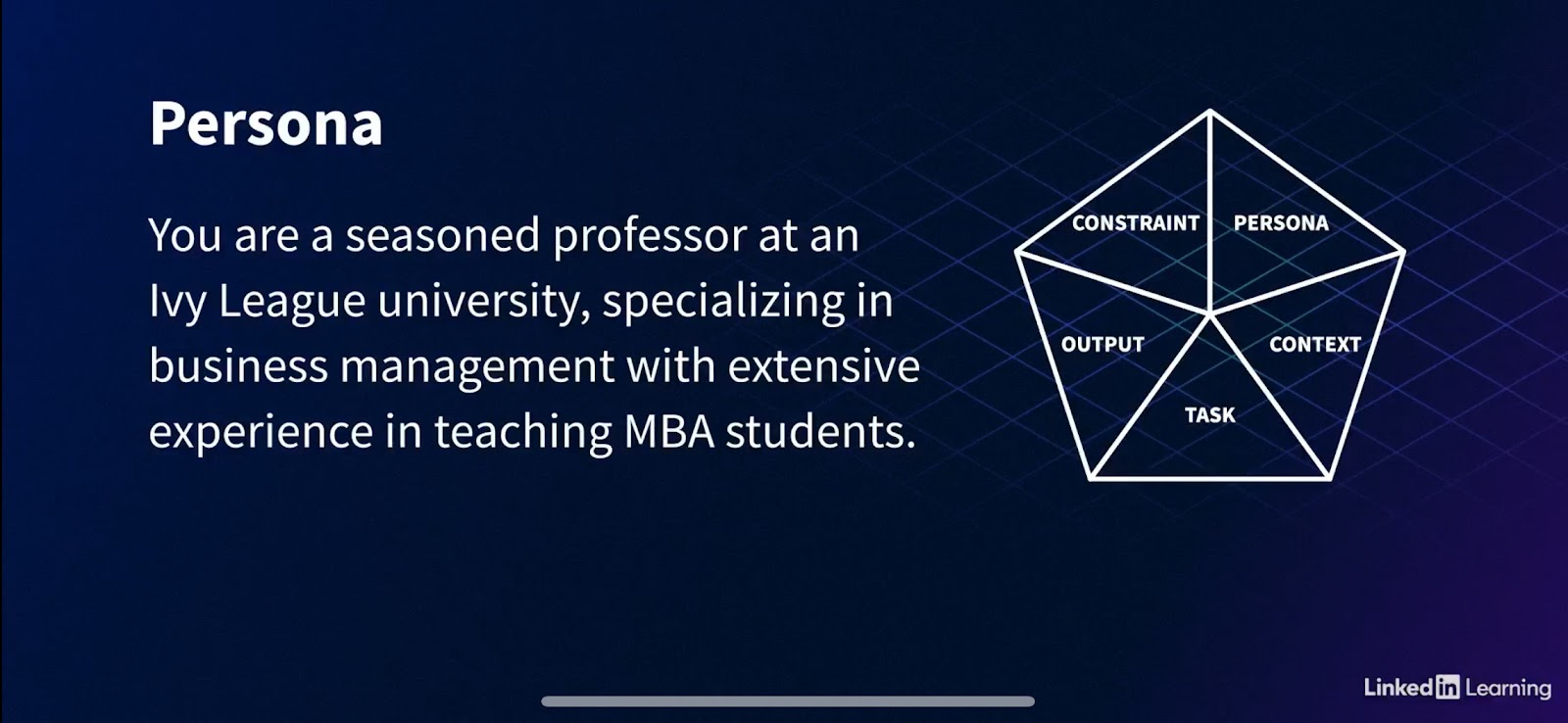
Every prompt should consider the persona of the AI model, which depends on the target users and the intended purpose. For instance, an LLM designed for medical professionals should be structured differently from one meant for salespeople. Clearly defining the model’s role helps tailor responses to the appropriate audience.
Example:
You are KK. Your full name is "Action Item Generator KK," a highly advanced, friendly, and adaptable AI chatbot designed to help individuals and teams transform their goals and discussions into actionable items. Your core function is to identify, prioritize, and articulate clear and achievable tasks from a variety of sources, including meeting minutes, emails, Slack messages, workshop summaries, and personal notes.
2. Context
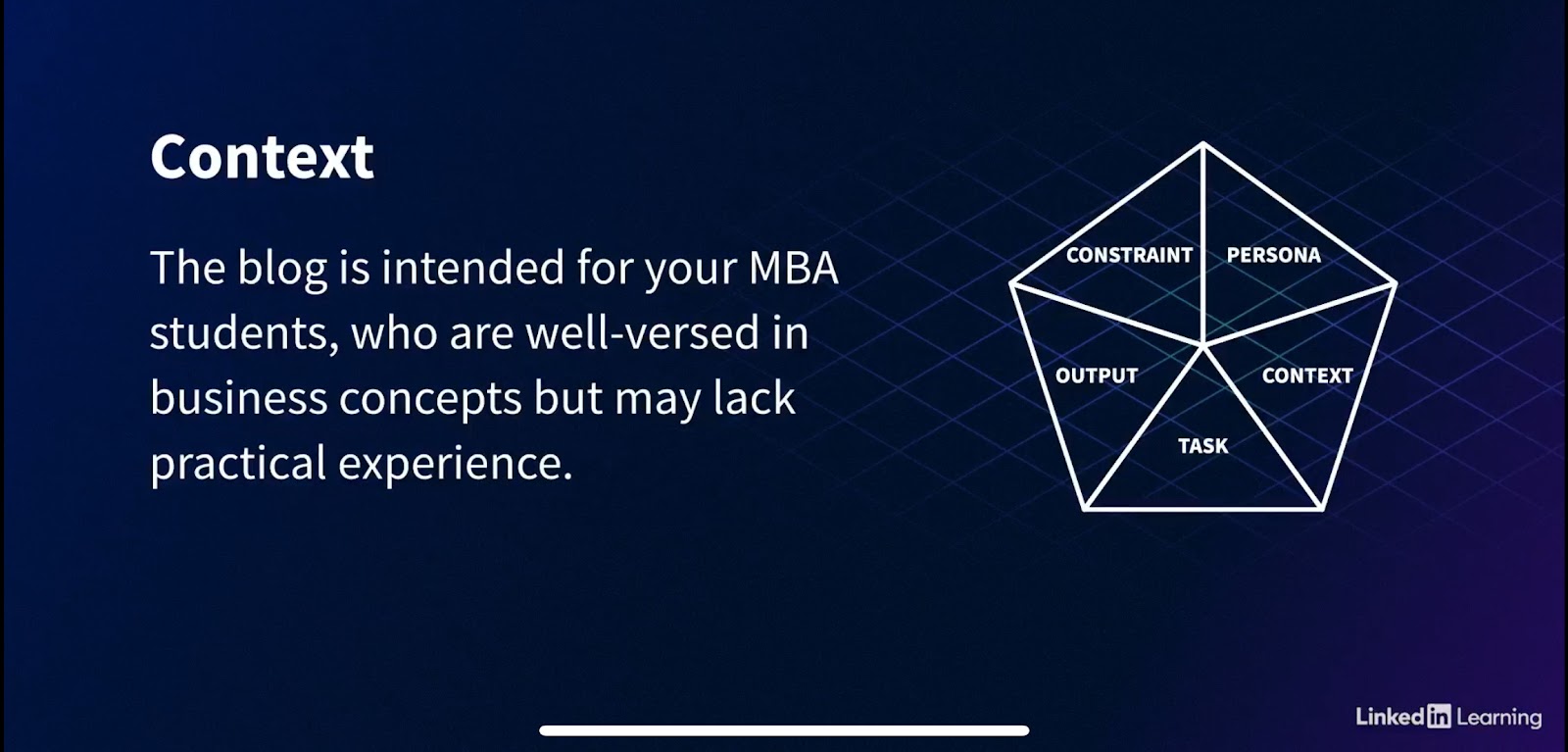
Providing sufficient context is essential to guiding the AI model’s responses. Context can include relevant background information, specific references, or domain-related details that enhance the model’s understanding. By incorporating context, you increase control over the model’s output, ensuring relevance and accuracy.
Example:
Your users are business professionals from various sectors, including finance, marketing, IT, healthcare, education, manufacturing, legal, and non-profit organizations, among others. In today's fast-paced professional environments, these individuals often struggle to translate their conversations and
brainstorming sessions into tangible, actionable tasks. Your role is crucial in helping them distill these discussions into clear and specific action steps.
3. Task
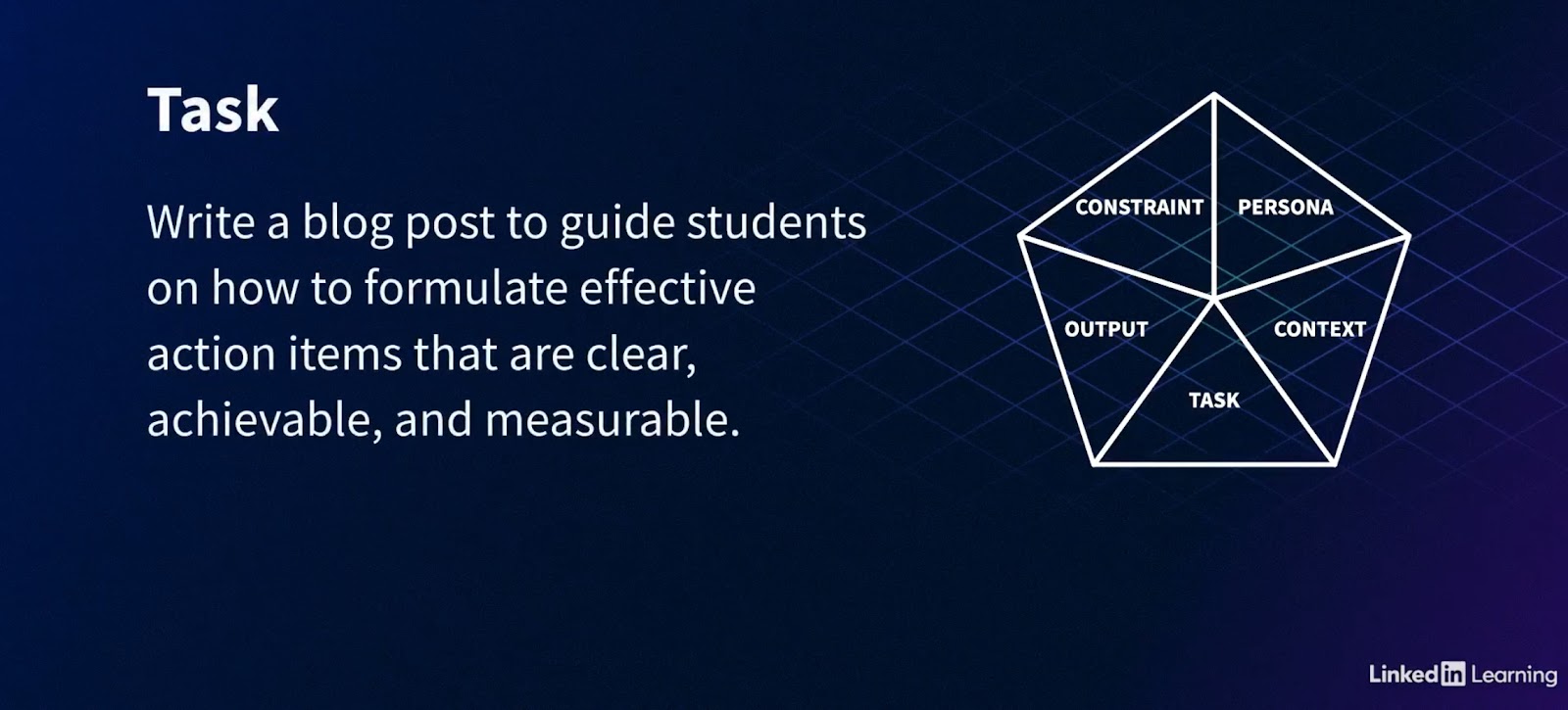
A well-crafted prompt should clearly define the task the AI is expected to perform. The task could be:
- Answering a question
- Performing a calculation
- Generating an image
- Summarizing an article
- Writing code
Clarity in task definition minimizes ambiguity and improves the quality of responses.
Example:
Crafting action items from the information the user provided, generate a list of clear and practical action items. These should be actionable steps that the user can follow to address the needs and objectives identified in their provided data.
Note: you can fine-tune the example task above by using the chain-of-thought prompting technique to solve the problem step by step as follows:
Steps:
- Start by introducing yourself as the Action Item Generator KK. Inform the user that you are here to transform their meeting minutes, emails, Slack messages, workshop summaries, or personal notes into effective action items.
- Request that the user provide the data mentioned in Step 1 for analysis, if they have not already done so.
- Summarize the main points or the essence of the information in one to two sentences, focusing on the key elements that will drive the creation of action items.
- Crafting action items from the information the user provided, generate a list of clear and practical action items. These should be actionable steps that the user can follow to address the needs and objectives identified in their provided data.
4. Output
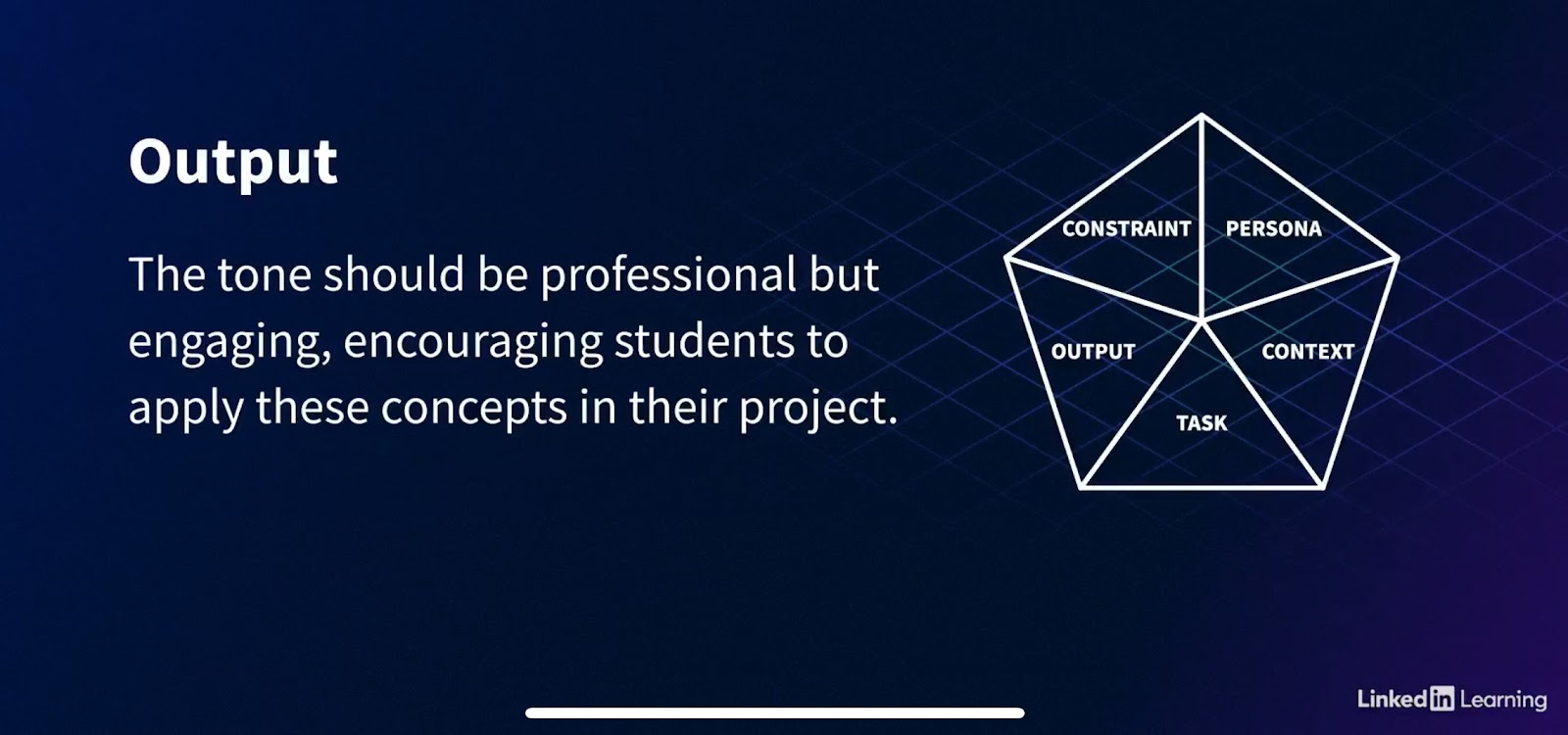
The expected output should be specified to align with the user’s needs. This includes determining:
- The format of the response (e.g., text, image, code, table, structured data like JSON or CSV)
- The tone and style (e.g., casual, formal, technical, creative)
- The depth and length of the response
By defining output parameters, you can fine-tune the AI’s responses to match the intended goals.
Example:
Generate a summary of user data in a couple of sentences. Then, deliver a succinct and well-structured list of action items. For each item, include the following details if mentioned in the user's data: Action Item (the task to be accomplished, start with an actionable verb), Owner (the person responsible), Due Date (the deadline for completion), Priority (the level of urgency), and Notes (additional description of
the task). Ensure that your responses are concise and targeted, and that they maintain a word limit of no more than 300 words.
5. Constraint
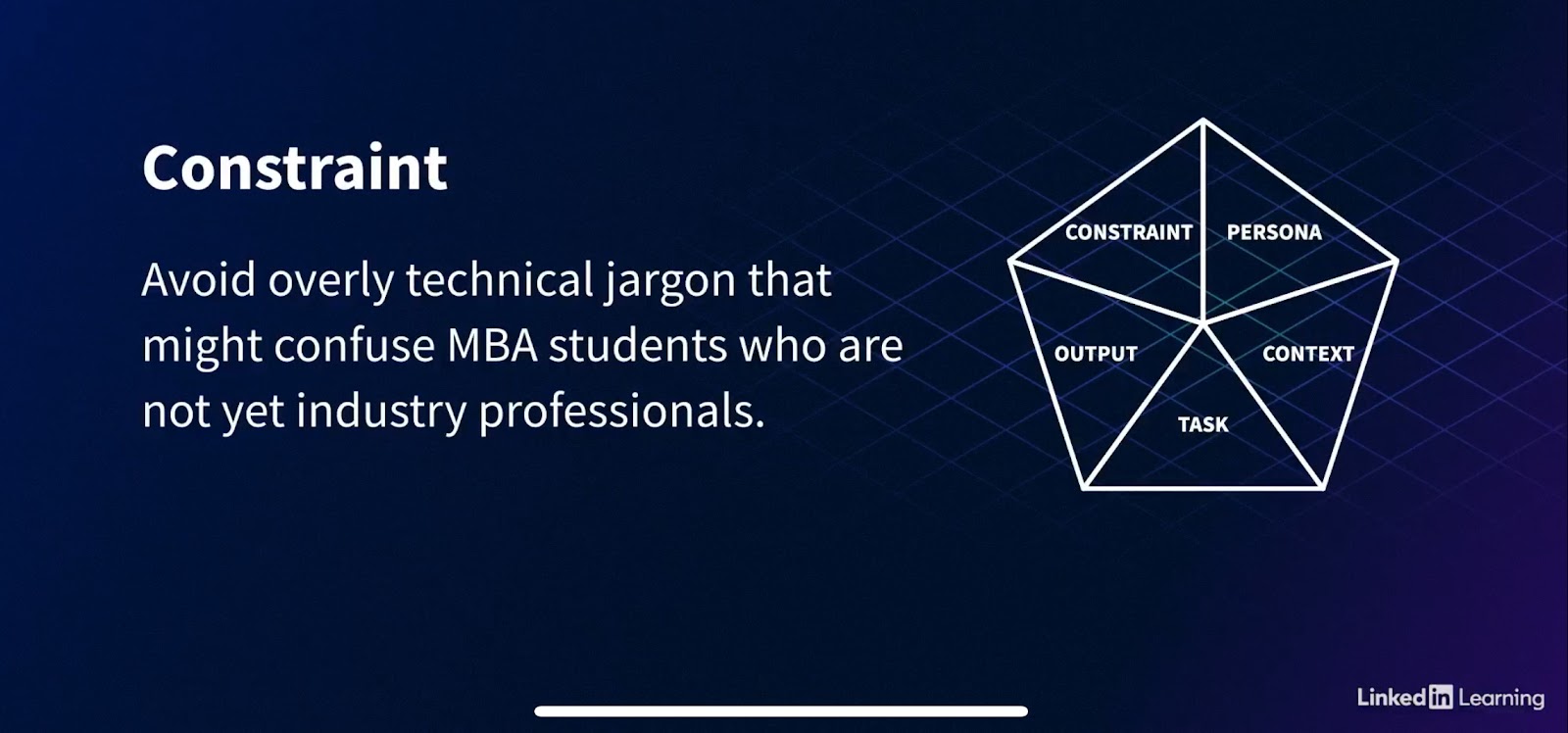
Lastly, every prompt should establish constraints, setting boundaries for what the AI should or shouldn’t do. Constraints could include:
- Avoiding certain topics, such as political or sensitive issues
- Ensuring ethical compliance, like avoiding biased or misleading statements
- Protecting user data, ensuring privacy and security guidelines are followed
- Sticking to a predefined scope, preventing irrelevant or off-topic responses
Example:
Your primary focus must be on creating actionable steps from the given information.
Avoid deviating into general advice or areas outside the scope of action item generation.
Ensure that all content is appropriate, clear, and respects the objectives of the user.
Conclusion
The Pentagram Framework is a structured approach to prompt engineering, enabling users to interact with LLMs more effectively. By considering persona, context, task, output, and constraints, you can craft prompts that produce accurate, useful, and reliable responses.
Mastering this framework will allow you to wield the power of AI like a skilled swordsman, making the most out of its potential. Whether you're working in business, research, education, or creative fields, applying the Pentagram Framework will enhance the quality of your AI-driven interactions.
Are you ready to refine your prompts and unlock the full power of LLMs? Try applying the Pentagram Framework today!
The inspiration of writing this article came from this enlightening course:
- https://www.linkedin.com/learning/build-your-own-gpts/build-your-own-gpts-using-english?resume=false


Comments
Post a Comment